


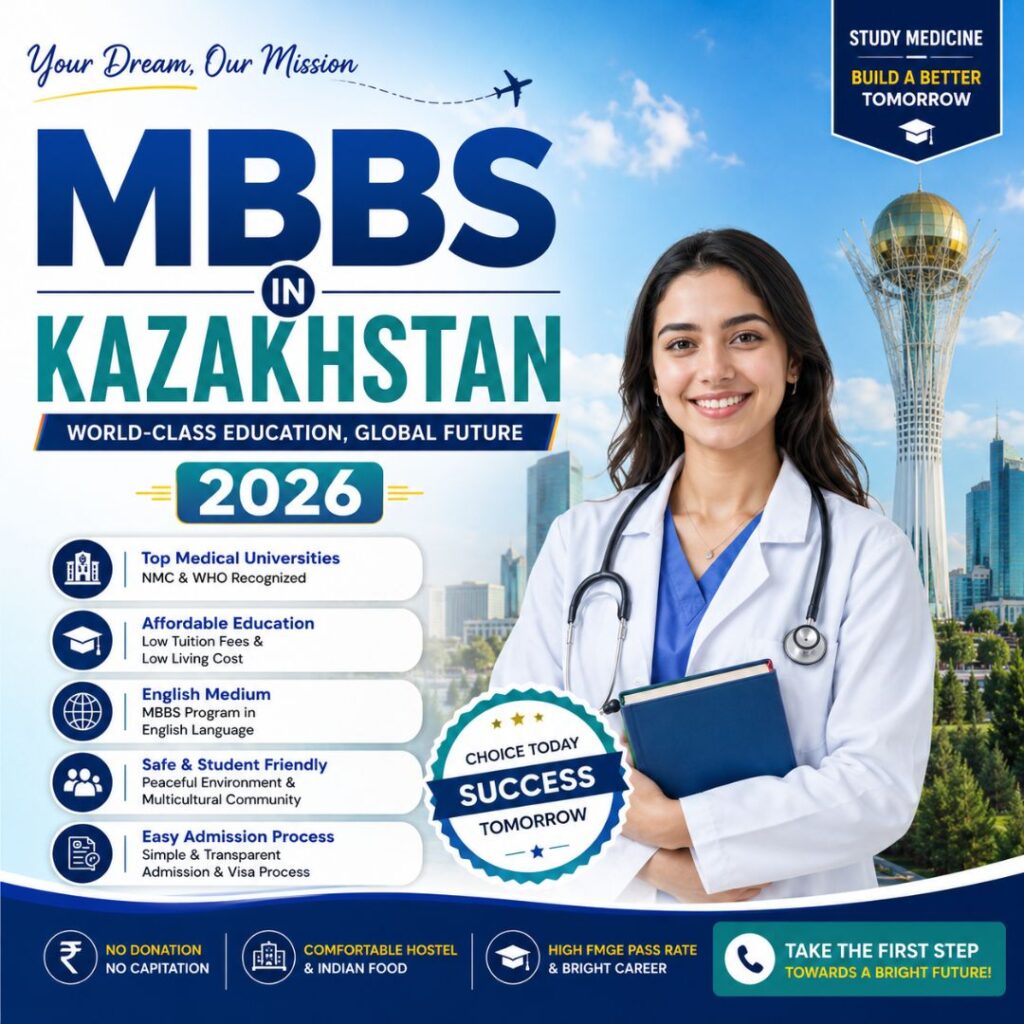
Every year, thousands of Indian students face the harsh reality of limited government medical seats and the prohibitive costs of private medical colleges, where fees can exceed ₹1 crore, often accompanied by “donation” demands. For NEET-qualified students from middle-class families, this dream of becoming a doctor can feel frustratingly out of reach.
Kazakhstan has emerged as a strategic, affordable alternative for quality medical education in 2026. With NMC-approved universities, English-medium instruction, and total program costs between ₹20-35 lakh for five years, Kazakhstan offers Indian students a genuine pathway to a global medical career without financial strain.
This comprehensive guide covers everything you need to know about pursuing MBBS in Kazakhstan for the 2026 intake, from eligibility requirements and top universities to detailed fee structures and the complete admission process.
Key Takeaways
Before diving into the details, here are the five most critical points about MBBS in Kazakhstan 2026:
- Affordability: Complete 5-year MBBS program costs ₹20-35 lakh total, compared to ₹1 crore+ in Indian private colleges
- NMC Recognition: Top Kazakhstan universities are approved by the National Medical Commission, WHO, and ECFMG, ensuring eligibility for Indian licensing exams
- English-Medium Instruction: Entire curriculum taught in English for international students, eliminating language barriers during foundational years
- Simplified Admission Process: No additional entrance exams beyond NEET; straightforward documentation and visa procedures
- Global Career Pathways: Graduates eligible for FMGE/NExT (India), USMLE (USA), and PLAB (UK) licensing examinations
Why Choose MBBS in Kazakhstan for 2026?
Kazakhstan represents the optimal balance between educational quality and financial accessibility for Indian medical aspirants, reflecting the broader shift described in studies on the globalisation and internationalisation of higher education in India. The country has invested heavily in modernizing its medical education infrastructure, creating a strong system that welcomes international students.
Financial Accessibility That Changes Lives
The cost difference is staggering. While private medical colleges in India demand ₹15-25 lakh per year plus substantial “capitation fees,” Kazakhstan offers complete 5-year programs for ₹4-5 lakh annually. For a family from Hyderabad or anywhere in India, this difference can mean the distinction between pursuing medicine and abandoning the dream entirely.
According to the National Medical Commission, over 80,000 Indian students currently study medicine abroad, with Kazakhstan becoming increasingly popular due to its affordability and quality standards. The absence of donation culture and transparent fee structures provides peace of mind for families planning their educational investment.
“The transparent fee structure in Kazakhstan medical universities eliminates the stress of hidden costs and donation demands that plague Indian private medical education.” – Education Consultant, Abroad Advice
Global Recognition and Licensing Eligibility
Top Kazakhstan medical universities are listed in the World Directory of Medical Schools (WDOMS) and recognized by the National Medical Commission (formerly MCI), World Health Organization, and Educational Commission for Foreign Medical Graduates. This recognition ensures graduates can pursue medical licensure in India through the National Exit Test (NExT), previously known as FMGE.
Beyond India, Kazakhstan MBBS graduates are eligible to sit for the United States Medical Licensing Examination (USMLE) for practice in America and the Professional and Linguistic Assessments Board (PLAB) examination for the United Kingdom. This global recognition opens doors to international medical careers that would otherwise require significantly higher educational investments.
Modern Infrastructure and Clinical Excellence
Kazakhstan universities follow the European Credit Transfer and Accumulation System (ECTS), aligning their curriculum with international medical education standards. Students gain access to affiliated state hospitals with high patient volumes, providing extensive hands-on clinical experience during the final two years of study.
Universities are equipped with modern simulation centers, digital anatomy labs, and research facilities, though students should be aware of research integrity under publication requirements as documented in recent studies on doctoral education in Kazakhstan. The emphasis on practical skills and clinical exposure ensures graduates are well-prepared for real-world medical practice.
What Makes Kazakhstan Stand Out Among Central Asian Countries?
When comparing Kazakhstan to other popular Central Asian destinations like Kyrgyzstan, Russia, and Georgia, several factors distinguish it as the premier choice for Indian students in 2026.
| Feature | Kazakhstan | Kyrgyzstan | Russia | Georgia |
|---|---|---|---|---|
| Duration | 5 Years | 5-6 Years | 6 Years | 6 Years |
| Cost | Low (₹4-5L/year) | Lowest (₹3-4L/year) | Medium (₹5-7L/year) | Medium-High (₹6-8L/year) |
| NMC Compliance | Highly Compliant | Compliant | Compliant | Compliant |
| Proximity to India | 4-5 Hour Flight | 5-6 Hour Flight | 6-8 Hour Flight | 8+ Hour Flight |
| Ease of Visa | High | High | Moderate | Moderate |
Kazakhstan’s economic stability sets it apart. As the largest and wealthiest Central Asian nation, Kazakhstan offers superior infrastructure, safety, and quality of life compared to neighboring countries. The capital city Astana and commercial hub Almaty are modern, cosmopolitan cities with excellent public transportation, high-speed internet, and well-developed amenities.
Direct flight connectivity from major Indian cities including Delhi, Mumbai, and Hyderabad makes travel convenient for students and visiting parents. Air Astana and other carriers operate regular flights, with journey times typically under five hours from most Indian metros.
The growing Indian student community exceeds 10,000 students across Kazakhstan, creating a supportive cultural environment. Indian restaurants, grocery stores, and cultural associations are readily available in university cities, helping students maintain connections to home while adapting to their new environment.
How Does the English-Medium Curriculum Benefit Indian Students?
Language barriers represent one of the biggest concerns for students considering medical education abroad. Kazakhstan eliminates this concern entirely for international students.
The complete MBBS curriculum for international students is delivered in English, from first-year anatomy lectures through final-year clinical rotations. This allows students to focus entirely on mastering complex medical concepts rather than struggling with a foreign language simultaneously.
Universities provide comprehensive English-language textbooks, lecture materials, and examination papers. Faculty members teaching international streams are proficient in English, ensuring clear communication and effective learning. This English-medium approach aligns with the language used in global medical licensing examinations like USMLE and PLAB, providing additional preparation advantages.
While the academic curriculum is in English, universities offer optional Russian and Kazakh language courses starting from the first year. By the third and fourth years, when students begin intensive clinical rotations, basic proficiency in the local language becomes valuable for patient communication. However, this is a gradual learning process rather than an immediate requirement.
Many universities now integrate FMGE/NExT preparation materials directly into their curriculum, often inviting Indian medical educators to conduct coaching sessions and mock examinations. These materials are provided in English, ensuring students can begin licensing exam preparation early in their medical education.
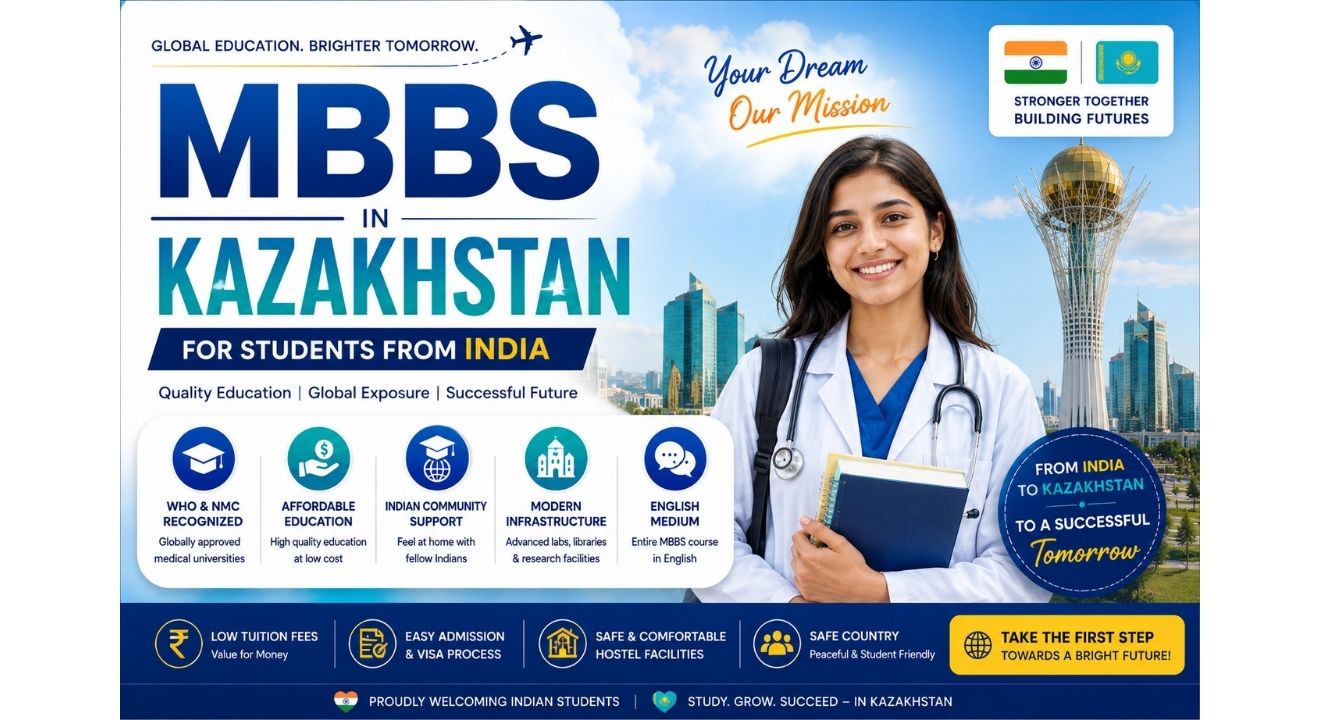
Top Medical Universities in Kazakhstan for 2026
Selecting the right university is vital for long-term career success. The following institutions represent the best NMC-approved medical universities in Kazakhstan, each offering distinct advantages for Indian students.
When evaluating universities, consider factors including clinical exposure opportunities, infrastructure quality, Indian student support systems, faculty credentials, and FMGE passing rates among alumni. Abroad Advice conducts thorough assessments of each student’s academic background, career goals, and financial situation to recommend the most suitable institution.
Kazakh National Medical University (Asfendiyarov), Almaty
Established in 1930, Kazakh National Medical University stands as the oldest and most prestigious medical institution in Kazakhstan. Located in Almaty, the country’s largest city and former capital, it offers students access to world-class medical facilities and urban amenities.
The university is renowned for its extensive research capabilities and strong clinical base. It maintains partnerships with multiple government hospitals and specialized medical centers, providing students with diverse clinical exposure across various medical specialties. The institution has produced numerous medical leaders who now practice across Kazakhstan and internationally.
Indian students at Kazakh National Medical University consistently report high satisfaction with the quality of education and clinical training. The university has established dedicated support systems for international students, including orientation programs, cultural associations, and academic counseling services.
According to data from Abroad Advice, graduates from Kazakh National Medical University demonstrate strong FMGE passing rates, with many alumni now practicing successfully in India and abroad. The university’s reputation and rigorous academic standards make it an excellent choice for students seeking premium medical education.
Astana Medical University
Founded in 1964 and located in Kazakhstan’s capital city Astana (formerly Nur-Sultan), Astana Medical University represents modern medical education at its finest. The capital location provides proximity to top-tier government hospitals and specialized medical research centers.
The university is recognized as a leader in medical innovation and research within Central Asia. It maintains strong collaborative relationships with international healthcare organizations, facilitating student exchange programs and global exposure opportunities. The modern campus features state-of-the-art laboratories, digital learning facilities, and comfortable student accommodations.
Astana’s status as the capital city offers distinct advantages. Students gain exposure to cutting-edge medical practices and have opportunities to participate in national-level medical conferences and research initiatives. The city’s modern infrastructure, including efficient public transportation and international amenities, ensures a comfortable living experience.
The university places strong emphasis on practical skills development, with students beginning hospital rotations early in their academic path. This hands-on approach ensures graduates are well-prepared for clinical practice and licensing examinations.
Al-Farabi Kazakh National University, Almaty
Established in 1934, Al-Farabi Kazakh National University consistently ranks among the top universities globally and is the highest-ranked institution in Kazakhstan. While known for its comprehensive academic programs across disciplines, its medical faculty offers a strong MBBS program with interdisciplinary learning opportunities.
The university’s global recognition and research focus provide students with notable advantages. Medical students can participate in interdisciplinary research projects, collaborate with students from other scientific disciplines, and access world-class research facilities. This exposure to broader scientific inquiry strengthens critical thinking and research skills.
Al-Farabi offers an excellent balance between quality education and affordability. According to fee structures from Abroad Advice, Al-Farabi’s annual tuition of ₹4,25,000 makes it the most affordable option among top-tier Kazakhstan medical universities, without compromising educational quality.
The university’s location in Almaty provides access to the country’s best medical facilities and a lively urban environment. The large international student population creates a diverse, multicultural campus atmosphere that enriches the educational experience.
Semey State Medical University
Founded in 1953, Semey State Medical University has built a distinguished reputation over nearly seven decades. The institution is particularly famous for its specialized expertise in nuclear medicine and radiotherapy, offering students special learning opportunities in these advanced medical fields.
The university maintains dedicated hostels specifically for international students, with strong support systems designed to help Indian students adapt and thrive. Student satisfaction rates are consistently high, with many students praising the personalized attention and supportive faculty.
Semey offers excellent clinical practice opportunities through its affiliated hospital system. Students gain extensive hands-on experience across various medical specialties, preparing them thoroughly for independent medical practice. The university’s affordable fee structure combined with lower living costs in Semey makes it an attractive option for budget-conscious families.
The city of Semey, while smaller than Almaty or Astana, offers a safe, welcoming environment for international students. The lower cost of living allows students to maintain a comfortable lifestyle without financial strain, and the close-knit international student community provides strong peer support.
South Kazakhstan Medical Academy, Shymkent
Located in Shymkent, South Kazakhstan Medical Academy is renowned for its specific focus on pharmaceutical and clinical medical sciences. The academy offers an exceptionally high faculty-to-student ratio, ensuring personalized attention and mentorship throughout the medical education experience.
Shymkent’s location in southern Kazakhstan provides a milder climate compared to northern cities, making it easier for students from warmer regions of India to adapt. The lower cost of living in Shymkent represents a significant financial advantage, with students reporting monthly expenses 20-30% lower than in Almaty or Astana.
The academy emphasizes practical clinical training and maintains strong relationships with regional hospitals and healthcare facilities. Students gain diverse clinical exposure while benefiting from close faculty supervision and guidance. This personalized approach to medical education helps students build strong foundational skills and confidence.
The quality of life in Shymkent is excellent, with modern amenities, safe neighborhoods, and a growing international student community. Indian students find the city welcoming and comfortable, with access to familiar food options and cultural connections.
MBBS in Kazakhstan Fees: Complete Cost Breakdown for 2026
Transparency in financial planning is essential for families making this significant educational investment. The following breakdown provides complete cost details for the 2026 academic year, based on official university fee structures and Abroad Advice’s extensive experience guiding students to Kazakhstan.
All costs are presented in multiple currencies for clarity, with conversions based on current exchange rates (1 USD = ₹85; 1 Tenge = ₹0.17) — readers can explore Business Perspectives – Regional wage data for deeper context on Kazakhstan’s economic landscape. Families should note that exchange rates fluctuate, and Abroad Advice provides updated cost estimates during consultation.
Annual Tuition Fees at Top Universities
Tuition fees vary by institution based on infrastructure, faculty credentials, and research facilities. The following table presents detailed annual tuition costs for each recommended university:
| University | Annual Tuition (USD) | Annual Tuition (Tenge) | Annual Tuition (INR) |
|---|---|---|---|
| Al-Farabi Kazakh National University | $5,000 | 25,00,000 | ₹4,25,000 |
| Astana Medical University | $5,500 | 27,50,000 | ₹4,67,500 |
| Kazakh National Medical University | $6,000 | 30,00,000 | ₹5,10,000 |
| Semey State Medical University | $4,500 | 22,50,000 | ₹3,82,500 |
| South Kazakhstan Medical Academy | $4,800 | 24,00,000 | ₹4,08,000 |
Tuition fees remain consistent across all five years of the program at most universities. Payment is typically structured in two installments per academic year, allowing families to manage cash flow more effectively. Universities accept payment via international wire transfer directly to their official accounts, ensuring security and proper documentation.
The fees cover all academic instruction, laboratory access, library facilities, examination costs, and basic medical insurance. There are no hidden charges or surprise fees during the course of study. This transparency stands in stark contrast to the donation culture prevalent in many Indian private medical colleges.
Living Expenses and Accommodation Costs
Beyond tuition, students must budget for accommodation, food, and personal expenses. Kazakhstan offers remarkably affordable living costs compared to Western countries and even many Indian metropolitan areas.
Hostel Accommodation: University-managed hostels charge between $600-$1,500 per year (₹51,000-₹1,27,500), depending on the institution and room type. Hostels are centrally heated for harsh winters, equipped with Wi-Fi, and include basic furniture. Security is excellent, with 24/7 CCTV surveillance and controlled entry systems. Most universities require first-year students to stay in hostels, with optional off-campus housing available from the second year.
Food and Mess Expenses: Indian mess facilities are widely available near all major universities, providing familiar vegetarian and non-vegetarian meals. Annual food costs range from $1,000-$1,300 (₹85,000-₹1,10,500). First-year students at some universities have mandatory mess enrollment, ensuring proper nutrition during the adjustment period. Students can also cook in hostel kitchens, potentially reducing food expenses further.
Monthly Living Expenses: Beyond accommodation and food, students need approximately $150-$250 (₹12,750-₹21,250) monthly for:
- Groceries and personal items
- Local transportation
- Mobile phone service
- Personal care items
- Occasional entertainment
Kazakhstan’s public transportation is efficient and inexpensive, with monthly student passes costing under $10 in most cities.
One-Time Initial Expenses: First-year students should budget ₹1,50,000-₹2,00,000 for one-time costs including:
- Visa processing fees
- Health insurance
- Medical examinations (HIV/AIDS testing and communicable disease screening)
- Airfare from India to Kazakhstan
- Airport pickup
- Initial winter clothing purchases
- University registration charges
Abroad Advice charges ₹1,75,000 for comprehensive admission, invitation, and visa processing services, covering all documentation, translations, and support throughout the admission cycle.
Total Investment: 5-Year MBBS Program
Calculating the complete investment for the entire 5-year program helps families plan effectively:
Most Affordable Option (Al-Farabi Kazakh National University):
- Total tuition (5 years): ₹21,25,000
- Accommodation (5 years): ₹6,00,000
- Food (5 years): ₹5,00,000
- Living expenses (5 years): ₹9,00,000
- Initial one-time costs: ₹2,00,000
- Total: ₹43,25,000 (approximately $50,882)
Premium Option (Kazakh National Medical University):
- Total tuition (5 years): ₹25,50,000
- Accommodation (5 years): ₹7,50,000
- Food (5 years): ₹5,50,000
- Living expenses (5 years): ₹10,00,000
- Initial one-time costs: ₹2,00,000
- Total: ₹50,50,000 (approximately $59,412)
Compare these figures to Indian private medical colleges, where annual fees alone can reach ₹15-25 lakh, with total 5-year costs exceeding ₹1 crore when including donations and other charges. For middle-class Indian families, Kazakhstan offers genuine accessibility to quality medical education without crippling debt.
“The complete transparency in fee structures at Kazakhstan universities provides families with predictable costs and eliminates the anxiety of unexpected financial demands throughout the program.” – Financial Counselor, Abroad Advice
Eligibility Criteria and Admission Process for 2026
Understanding eligibility requirements and the admission timeline is necessary for successful application. The process for Kazakhstan is significantly more straightforward than Indian medical admissions, with clear requirements and predictable timelines.
What Are the Academic and NEET Requirements?
To be eligible for MBBS admission in Kazakhstan for the 2026 intake, Indian students must meet the following NMC-mandated criteria:
NEET-UG Qualification: Every Indian student must possess a valid NEET-UG qualifying scorecard from 2024, 2025, or 2026. The National Medical Commission requires NEET qualification for all students pursuing medical education abroad who intend to practice in India after graduation. The specific NEET score is less important than qualification status, as Kazakhstan universities do not use NEET scores for admission ranking.
Class 12 Academic Requirements: Students must have completed Higher Secondary education (10+2) with Physics, Chemistry, and Biology as core subjects. Minimum aggregate requirements are:
- 50% in PCB subjects for General category students
- 40% for SC/ST/OBC reserved category students
These percentages must be achieved in the qualifying examination (typically Class 12 board exams).
Age Criteria: Applicants must be at least 17 years old on or before December 31, 2026. There is no upper age limit for admission, though students should consider career timeline implications when applying at older ages.
Language Proficiency: No IELTS, TOEFL, or other English language proficiency tests are required for admission. The medium of instruction is English, but universities do not mandate formal language certification. Students who completed their schooling in English medium are automatically considered proficient.
Passport Validity: A valid passport with at least two years of remaining validity from the intended date of travel is required for visa processing. Students should ensure passport renewal well in advance if validity is insufficient.
Abroad Advice conducts thorough eligibility verification during initial consultations, ensuring students meet all requirements before beginning the application process. This prevents wasted time and resources on applications that cannot succeed.
Step-by-Step Admission Process Timeline
The admission process for Kazakhstan’s September 2026 intake follows a structured timeline from January through October. Understanding this timeline helps students and families plan effectively.
January-March 2026: Research and Consultant Selection
This initial phase involves researching universities, understanding fee structures, and selecting a trusted education consultant. Families should use this time to verify consultant credentials, speak with current students, and understand the complete cost and process.
Abroad Advice recommends scheduling consultations during this period to assess student profiles, discuss university options, and create personalized admission strategies. Our Hyderabad office (H.No. 3-61, Flat No. 203, Venkatadri Enclave, St.No.6, Habsiguda, Hyderabad-500007) welcomes walk-in consultations, or families can call +91 9966445939 or +91 9032598989 to schedule appointments.
April-June 2026: University Selection and Application Preparation
Following NEET results (typically released in June), students finalize university selections based on their academic profiles and financial considerations. This phase involves gathering and preparing all required documents including:
- Mark sheets
- Birth certificates
- Passport copies
- NEET scorecards
Abroad Advice assists with document preparation, ensuring all materials meet university requirements and are properly authenticated. We handle translations, notarizations, and formatting to match specific university standards.
July-August 2026: Application Submission and Admission Confirmation
Applications are submitted digitally to selected universities, typically through official university portals or authorized representatives. Universities review applications and issue provisional admission letters within 7-10 working days for eligible candidates.
Once the admission letter is received, universities begin processing the official invitation letter through Kazakhstan’s Ministry of Foreign Affairs. This invitation letter is a mandatory document for student visa applications and typically takes 3-4 weeks to process.
August-September 2026: Visa Processing and Travel Arrangements
With the invitation letter in hand, students apply for Kazakhstan student visas at the nearest Kazakhstan Embassy (located in New Delhi, Mumbai, or Chennai). Abroad Advice provides comprehensive visa document checklists, reviews all materials for completeness, and assists with form completion and submission.
The visa processing timeline is typically 10-15 working days. Once approved, students can book flights and finalize travel arrangements. Abroad Advice coordinates group departures when possible, with representatives accompanying students to ensure safe arrival and smooth hostel check-in.
September-October 2026: Departure and Academic Session Commencement
The academic session typically begins in late September or early October. Students depart India in groups, arriving at Almaty or Astana airports where university representatives provide airport pickup and transportation to campus.
The first week involves:
- Orientation programs
- Hostel settlement
- University registration
- Local police registration
- Medical insurance activation
- Academic induction
Abroad Advice maintains contact with students during this transition period, providing ongoing support as needed.
How Abroad Advice Simplifies Your MBBS in Kazakhstan Process
Navigating international medical admissions can feel overwhelming, particularly for families undertaking this experience for the first time. Abroad Advice has guided hundreds of students to successful medical careers abroad since our establishment in 2006, bringing nearly two decades of expertise to every consultation.
Our comprehensive, end-to-end services eliminate confusion and reduce stress throughout the admission process. As authorized representatives of Kazakhstan’s top medical universities, we provide accurate, verified information that families can trust.
Personalized University Selection Based on Your Profile
Every student has distinct strengths, goals, and circumstances. We begin with thorough profile assessments, evaluating:
- Academic performance
- NEET scores
- Budget constraints
- Career aspirations
- Personal preferences
This assessment allows us to recommend universities that genuinely match each student’s needs rather than pushing one-size-fits-all approaches.
We provide detailed comparisons of English-medium versus Russian-medium programs, explain the advantages and considerations of each option, and help families make informed decisions. Our recommendations prioritize NMC-approved institutions with strong track records of student satisfaction and FMGE success.
Complete Documentation Support and Verification
Documentation errors are among the most common causes of visa delays and rejections. Abroad Advice provides comprehensive support for preparing and authenticating all required documents including:
- Class 10 and 12 mark sheets
- Birth certificates
- Passport copies
- Medical fitness certificates
- HIV/AIDS test reports
- Financial statements
We handle document translations into English or Russian as required, ensure proper notarization and apostille certification, and verify that all materials meet specific university and embassy requirements. This attention to detail significantly improves approval rates and timeline predictability.
Application and Visa Processing Expertise
Our team manages the complete application process, submitting materials to multiple universities simultaneously when appropriate to maximize admission chances. We maintain direct communication channels with university admission offices, enabling quick resolution of any questions or issues.
For visa processing, we provide:
- Exhaustive document checklists specific to Kazakhstan Embassy requirements
- Review of all materials for accuracy and completeness
- Assistance with visa application form completion
- Guidance on embassy interview preparation when required
Our experience with Kazakhstan visa procedures ensures smooth processing with minimal delays.
Pre-Departure Orientation and Post-Arrival Support
Preparing students for life in Kazakhstan is as important as securing admission. Abroad Advice conducts detailed pre-departure orientations covering:
- Academic expectations
- Cultural adaptation strategies
- Climate preparation (particularly winter clothing requirements)
- Financial management abroad
- Safety protocols
Our support continues after students arrive in Kazakhstan. We maintain regular contact with students, provide guidance for handling emergencies or unexpected situations, and serve as a liaison between students and universities when issues arise. This ongoing support provides peace of mind for families and helps students navigate challenges successfully.
NEET Guidance and Eligibility Verification
Ensuring NMC compliance is critical for students who intend to practice medicine in India after graduation. Abroad Advice verifies that students meet all NEET and academic eligibility requirements before beginning applications, preventing wasted time and resources on ineligible applications.
We stay current with NMC regulation changes and communicate updates to students and families promptly. This regulatory expertise protects students’ future practice eligibility and ensures informed decision-making throughout the process.
Career Counseling for Post-MBBS Pathways
Medical education doesn’t end with graduation. Abroad Advice provides career counseling covering all post-MBBS options including:
- FMGE/NExT preparation for Indian medical practice
- NEET-PG for specialization opportunities in India
- USMLE preparation for residency in the United States
- PLAB examination for UK medical practice
We recommend quality coaching resources, connect students with successful alumni who can share their experiences, and help students plan their career trajectories from early in their MBBS programs. This forward-looking guidance helps students make strategic decisions about their medical careers.
Transparency, Verification, and Physical Presence
In an industry unfortunately plagued by fraudulent consultants and misleading information, Abroad Advice stands apart through our commitment to transparency and verification. We encourage prospective students to:
- Verify our credentials
- Check our registration and authorization status
- Speak with current students we’ve placed in Kazakhstan
- Visit our physical office in Hyderabad
- Request detailed written agreements before making commitments
Our physical office presence in Hyderabad (Habsiguda), with additional locations in Vijayawada, Visakhapatnam, and Tirupati, demonstrates our commitment to accessible, accountable service. Families can visit us in person, meet our team, and build confidence in our services before beginning the admission process.
Contact Abroad Advice today to begin your MBBS in Kazakhstan experience with confidence and expert guidance.
What to Expect: Student Life and Clinical Training in Kazakhstan
Understanding what daily life looks like in Kazakhstan helps students and families prepare mentally and practically for this significant transition. Kazakhstan offers a safe, welcoming environment for international students, with modern infrastructure and strong support systems.
Campus Life, Safety, and Indian Community Support
Kazakhstan consistently ranks as one of the safest countries in Central Asia for international students. Crime rates are low, and there is widespread respect for international students throughout the country. Universities maintain excellent security protocols to ensure student safety.
Campus security includes:
- 24/7 CCTV surveillance throughout university buildings and hostel premises
- Security guards stationed at all entry points with controlled access systems
- Strict hostel entry and exit timing protocols
- Additional security attention for female students with separate hostel buildings
The thriving Indian student community exceeds 10,000 students across Kazakhstan, creating strong cultural support networks. Indian student associations organize regular cultural events, celebrate traditional festivals including Diwali, Holi, Navratri, and Eid, and provide peer support for new students adjusting to life abroad.
Indian restaurants and grocery stores are readily available in major university cities. Students can easily access familiar foods, spices, and ingredients, helping maintain dietary preferences and comfort. Many universities also operate Indian mess facilities on or near campus, providing affordable, familiar meals.
Modern infrastructure throughout Kazakhstan ensures comfortable living. Cities feature:
- Efficient public transportation systems including buses, trolleys, and metro services in larger cities
- High-speed internet connectivity in hostels and on campus
- Well-maintained roads and pedestrian infrastructure
- International amenities including shopping centers, entertainment venues, and healthcare facilities
The climate requires preparation, particularly for students from warmer regions of India. Winters can be harsh, with temperatures dropping well below freezing in northern cities like Astana. However, all buildings including hostels, classrooms, and hospitals are centrally heated, maintaining comfortable indoor temperatures year-round. Students should budget for quality winter clothing including insulated jackets, boots, and thermal wear.
Clinical Exposure and Curriculum Structure
Kazakhstan’s medical curriculum follows the European Credit Transfer and Accumulation System (ECTS), ensuring alignment with international medical education standards, and recent research such as Frontiers | Publish or perish studies highlights the evolving academic pressures shaping PhD and medical training environments in Kazakhstan. The program emphasizes practical skills and clinical exposure, preparing students thoroughly for independent medical practice.
Pre-Clinical Years (Years 1-2) focus on foundational medical sciences including:
- Anatomy (gross anatomy, histology, embryology)
- Biochemistry (metabolic pathways, molecular biology)
- Physiology (organ systems, homeostasis)
- Foundational subjects like medical ethics and communication skills
Students spend significant time in anatomy labs, working with cadavers and models to build thorough understanding of human structure.
Para-Clinical Year (Year 3) transitions to disease-focused sciences including:
- Microbiology (bacteriology, virology, parasitology)
- Pathology (general and systemic pathology)
- Pharmacology (drug mechanisms, therapeutic applications)
- Introduction to clinical methods
Students begin hospital visits during this year, observing patient interactions and clinical procedures.
Clinical Years (Years 4-5) involve intensive hospital rotations across major medical specialties. Students rotate through:
- Surgery (general surgery, orthopedics, trauma)
- Pediatrics (child health, neonatology)
- Internal Medicine (cardiology, pulmonology, gastroenterology)
- Obstetrics and Gynecology
- Emergency Medicine
- Various subspecialties
These rotations occur in affiliated state hospitals with high patient volumes, providing extensive hands-on experience.
Clinical training emphasizes practical skills development. Students learn to:
- Take patient histories
- Perform physical examinations
- Interpret diagnostic tests
- Develop treatment plans
- Participate in medical procedures under supervision
This hands-on approach ensures graduates are confident and competent when beginning independent practice.
Many universities now integrate FMGE/NExT coaching directly into the curriculum. Indian medical educators are invited to conduct review sessions, provide coaching materials, and administer mock examinations. This integration helps students prepare for licensing exams without requiring separate coaching after graduation, improving pass rates and reducing post-graduation stress.
Universities also provide USMLE and PLAB preparation materials for students interested in international medical careers. Early preparation (beginning in the third year) significantly improves success rates on these challenging examinations.
Frequently Asked Questions About MBBS in Kazakhstan 2026
Is MBBS in Kazakhstan Recognized in India?
Yes, top Kazakhstan medical universities are fully recognized by the National Medical Commission (formerly Medical Council of India). Universities including Kazakh National Medical University, Al-Farabi Kazakh National University, Astana Medical University, Semey State Medical University, and South Kazakhstan Medical Academy are all NMC-approved and listed in the World Directory of Medical Schools. Graduates are eligible to sit for the National Exit Test (NExT), formerly known as FMGE, which is mandatory for practicing medicine in India. Passing NExT grants full medical practice rights throughout India.
Can I Practice in the USA or UK After MBBS in Kazakhstan?
Absolutely. Kazakhstan’s top medical universities are recognized by the Educational Commission for Foreign Medical Graduates (ECFMG) and listed in the Foundation for Advancement of International Medical Education and Research (FAIMER) directory. This recognition makes graduates eligible to sit for the United States Medical Licensing Examination (USMLE) for practice in America. Similarly, graduates can take the Professional and Linguistic Assessments Board (PLAB) examination for medical practice in the United Kingdom. Universities provide USMLE and PLAB preparation materials, and Abroad Advice offers career counseling for students pursuing these international pathways. Early preparation starting from the third year significantly improves success rates.
What Is the Duration of MBBS in Kazakhstan?
The MBBS program in Kazakhstan is a standard 5-year course, including all clinical rotations and practical training. This duration aligns with international medical education standards and is shorter than the 6-year programs offered in Russia, Georgia, and some other countries. The 5-year structure allows students to complete their medical education and begin their careers sooner. There is no mandatory separate internship year, as clinical training is integrated throughout the program, particularly in years 4 and 5.
Do I Need to Learn Russian or Kazakh?
No, you do not need to know Russian or Kazakh for admission or academic studies. The complete MBBS curriculum for international students is taught in English, from first-year lectures through final-year clinical rotations. All textbooks, examination papers, and teaching materials are provided in English. However, learning basic Russian or Kazakh is highly recommended by the third year when students begin intensive clinical rotations. Basic language skills help with patient communication during hospital rotations, though medical instruction remains in English. Universities offer optional language support classes to help students develop these practical communication skills gradually.
What Happens If I Don’t Pass the FMGE/NExT Exam?
The National Exit Test (NExT/FMGE) is mandatory for practicing medicine in India after completing MBBS abroad. However, students can attempt the examination multiple times until they pass. Many Kazakhstan universities integrate NExT coaching and mock tests directly into their curriculum, significantly improving pass rates. Abroad Advice provides career counseling and coaching resource recommendations to help students prepare effectively. If students face challenges with NExT, alternative pathways exist including pursuing USMLE for practice in the United States, taking PLAB for UK medical practice, or practicing in other countries that recognize Kazakhstan medical degrees. The key is beginning preparation early, ideally from the third year of MBBS.
Are There Scholarships Available for Indian Students?
Some Kazakhstan universities offer limited merit-based scholarships for international students, primarily based on academic performance in Class 12 examinations and NEET scores. However, these scholarships are competitive and typically cover only partial tuition. Most Indian students rely on Kazakhstan’s inherently affordable fee structure rather than scholarships. Abroad Advice assists eligible students with scholarship application processes when opportunities are available. The affordability of Kazakhstan medical education compared to Indian private colleges means that even without scholarships, the investment remains accessible for middle-class families. Education loans from Indian banks are also available for students pursuing NMC-approved medical programs abroad.
Your Path to a Global Medical Career Starts Here
Pursuing MBBS in Kazakhstan for 2026 represents a strategic, financially accessible pathway to fulfilling your medical career dreams. With NMC-approved universities offering quality education at ₹20-35 lakh for the complete 5-year program, Kazakhstan eliminates the financial barriers that prevent so many talented Indian students from becoming doctors.
The combination of English-medium instruction, modern infrastructure, extensive clinical exposure, and global recognition creates an educational experience that prepares graduates for successful medical careers in India, the United States, the United Kingdom, and beyond. The simplified admission process and welcoming environment for Indian students make the transition smooth and manageable.
Abroad Advice has guided hundreds of students through this process since 2006, bringing nearly two decades of expertise, authorized university partnerships, and comprehensive support services to every consultation. We’re committed to transparency, student empowerment, and successful outcomes.
Take the first step toward your medical career today. Contact Abroad Advice for a personalized consultation to discuss your profile, explore university options, and create your roadmap to MBBS in Kazakhstan 2026.
Visit Our Hyderabad Office:
H.No. 3-61, Flat No. 203, Venkatadri Enclave
St.No.6, Habsiguda, Hyderabad-500007
Telangana State, India
Call Us:
+91 9966445939
+91 9032598989
Email:
md@abroadadvice.com
Website:
www.abroadadvice.com
We welcome you to visit our office, speak with current students studying in Kazakhstan, verify our credentials, and begin your path with confidence. Your dream of becoming a doctor is within reach—let Abroad Advice help you achieve it.