


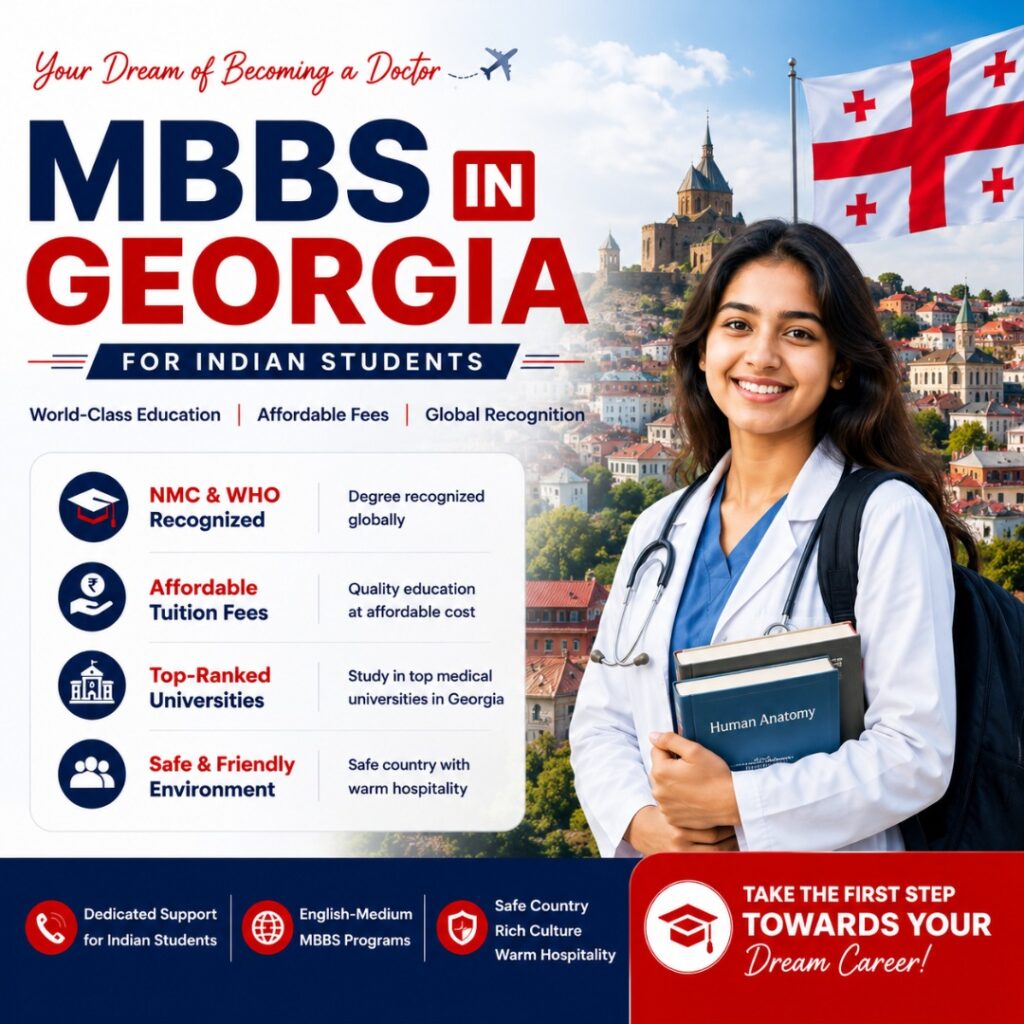
Securing a medical seat in India has become increasingly challenging, with over 2.4 million students competing for just 108,000 MBBS seats annually, and according to a comprehensive overview of Total MBBS Seats in India, seat availability continues to lag far behind applicant demand. Even students who qualify NEET often face prohibitive fees at private medical colleges, where management quota seats can cost upwards of ₹80 lakhs to ₹1 crore — a reality explored in depth by Medical education in India: costs, seats, controversy, and safety concerns. Georgia has emerged as a strategic alternative for Indian medical aspirants, offering WHO and NMC-recognized MD degrees (equivalent to MBBS) at a fraction of the cost. With English-medium instruction, European education standards, and total program costs ranging from ₹22-35 lakhs for six years, Georgia provides quality medical education without the financial burden. The country hosts over 8,000 Indian students currently enrolled in its medical universities, creating a supportive community for newcomers. Abroad Advice, with nearly 20 years of consultancy experience and a 99% visa success rate, guides Hyderabad students through every step of the admission process—from university selection to post-graduation licensing exam preparation.
Key Takeaways for MBBS in Georgia
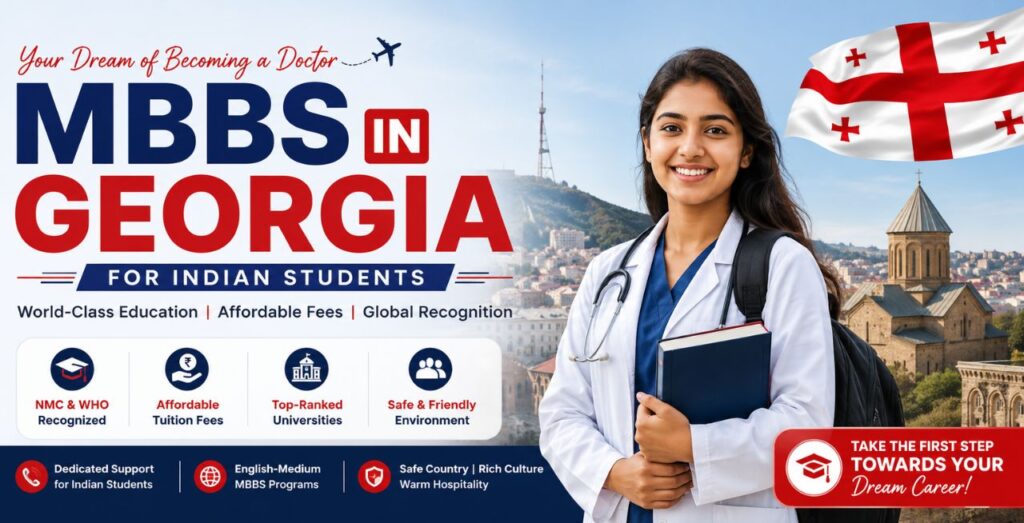
Georgia offers WHO and NMC-recognized MD degrees equivalent to MBBS, allowing graduates to practice medicine globally after clearing licensing exams like FMGE/NExT. Total program costs range from ₹22-35 lakhs for six years, significantly lower than Indian private medical colleges. No donation fees, English-medium curriculum, and simplified admission process make Georgia accessible to NEET-qualified students. High safety standards with Georgia ranking among the top 10 safest countries globally, plus an established Indian student community of 8,000+. Abroad Advice provides 99% visa success rate and nearly 20 years of consultancy experience, offering end-to-end support from admission to career guidance.
Why Choose MBBS in Georgia in 2026-27?
Georgia has positioned itself as a premier destination for Indian medical students seeking quality education without the financial strain of Indian private institutions. The country’s medical universities follow the European Credit Transfer and Accumulation System (ECTS), ensuring curriculum standards that align with international medical practice requirements. According to the Georgian Ministry of Education and Science, over 10,000 international students are currently enrolled in Georgian medical programs, with Indian students comprising approximately 80% of this population.
The combination of affordability, global recognition, and safety makes Georgia particularly attractive to families from Hyderabad and broader South India. Unlike destinations requiring language proficiency tests or additional entrance exams, Georgian universities streamline the admission process for NEET-qualified students. The country’s strategic location at the intersection of Eastern Europe and Western Asia provides students with exposure to diverse clinical cases and medical practices, preparing them for global medical careers.
Affordable Fee Structure Compared to Indian Private Colleges
The financial advantage of studying MBBS in Georgia becomes immediately apparent when comparing total program costs. Georgian medical universities charge annual tuition fees ranging from USD 4,000 to USD 8,000 (approximately ₹3.28 lakhs to ₹6.56 lakhs), with the complete six-year program costing between ₹22 lakhs and ₹35 lakhs including living expenses. In contrast, private medical colleges in India charge ₹80 lakhs to ₹1 crore for the same duration, often requiring substantial upfront payments or donations — and Despite increase in MBBS seats, government data shows thousands remain vacant each year due to these affordability barriers.
“Georgian medical education offers the same international standards as Western universities but at one-third the cost, making it accessible to middle-class Indian families who dream of their children becoming doctors.” — Dr. Ramesh Kumar, Medical Education Consultant
Tbilisi State Medical University, Georgia’s most prestigious institution, charges USD 8,000 annually with first-year miscellaneous charges of USD 3,000, bringing the total first-year cost to ₹9.02 lakhs and subsequent years to ₹6.56 lakhs each. Batumi Shota Rustaveli State University offers even more affordable options at USD 5,000 annually with hostel and food included at USD 3,000 per year, totaling ₹7.38 lakhs for the first year and ₹4.10 lakhs for subsequent years.
These transparent fee structures eliminate:
- Hidden costs and surprise charges
- Capitation fees common in Indian institutions
- Donation requirements that burden families
- Management quota premiums
Abroad Advice assists families with financial planning, scholarship applications, and banking guidance to optimize costs throughout the program duration.
Global Recognition and Licensing Opportunities
Georgian medical degrees hold recognition from the National Medical Commission (India), World Health Organization, Educational Commission for Foreign Medical Graduates (USA), and Foundation for Advancement of International Medical Education and Research. This multi-level recognition ensures graduates can pursue medical careers across multiple countries, not just India. Students completing their MD from Georgian universities are eligible to appear for FMGE/NExT examinations in India, USMLE in the United States, and PLAB in the United Kingdom.
According to data from the NMC, approximately 70-80% of Georgian MBBS graduates who receive proper preparation successfully clear Indian licensing examinations on their first or second attempt. This success rate reflects the quality of clinical training and curriculum alignment with international standards. Georgian universities provide ECFMG sponsorship, a critical requirement for students planning to pursue residency in the United States. Abroad Advice enhances this preparation by providing dedicated FMGE resources throughout the six-year program, not just after graduation, ensuring students remain focused on licensing exam requirements from day one.
Safety, Quality of Life, and Student-Friendly Environment
Georgia consistently ranks among the top 10 safest countries globally, with a crime rate significantly lower than most European nations. The country’s “Guest is God” cultural philosophy creates a welcoming environment for international students, particularly important for parents concerned about their children’s safety thousands of miles from home. The established Indian student community of 8,000+ provides peer support networks, cultural familiarity, and practical guidance for newcomers adjusting to life abroad.
Major cities like Tbilisi and Batumi feature numerous Indian restaurants, grocery stores stocking essential spices and ingredients, and student mess facilities catering specifically to Indian dietary preferences. Monthly living expenses of USD 150-300 cover accommodation, food, and transportation comfortably. The climate features cold winters with central heating in all buildings and pleasant summers, offering a stark yet beautiful change for Indian students. Modern infrastructure, efficient public transportation systems (Metro, buses, and Marshrutkas), and affordable healthcare services contribute to a high quality of life. Abroad Advice’s pre-departure orientation programs prepare students for weather considerations, cultural adaptation, and practical aspects of daily life in Georgia.
Eligibility Criteria for Indian Students
Understanding and meeting eligibility requirements is the first critical step toward securing admission in Georgian medical universities. The National Medical Commission has established clear guidelines that Indian students must fulfill to pursue medical education abroad and subsequently practice in India. These requirements ensure students possess the necessary academic foundation and regulatory compliance for successful medical careers.
Academic and NEET Requirements
Indian students must have completed 10+2 education from a recognized board (CBSE, ICSE, or State Boards) with Physics, Chemistry, and Biology as core subjects. General category students require a minimum aggregate of 50% in PCB subjects, while SC/ST/OBC reserved category students need 40% minimum. These percentages are calculated based on theory and practical marks combined, not individual subject scores.
NEET qualification is mandatory for all Indian students aspiring to study medicine abroad, as per NMC regulations implemented in 2019. Students must have qualified NEET at least once within the last three years from the date of application. Importantly, only qualifying marks are required—there is no minimum percentile threshold for admission to Georgian universities. This regulation applies regardless of the country where students plan to study, making NEET clearance non-negotiable for those intending to return and practice in India.
Georgian universities do not require additional entrance examinations studying MBBS abroad. Unlike many Western countries, IELTS or TOEFL scores are not mandatory for admission to most Georgian medical institutions, as the medium of instruction is English and universities conduct their own brief language proficiency assessments during the application process. Abroad Advice verifies each student’s eligibility during the initial consultation, ensuring complete compliance with NMC regulations before proceeding with applications.
Age and Documentation Requirements for MBBS in Georgia
Students must be at least 17 years old by December 31st of the admission year to meet Georgian Ministry of Education standards. This age requirement aligns with international medical education norms and ensures students possess the maturity necessary for rigorous medical training. There is no upper age limit for admission, making Georgian medical universities accessible to students who may have taken gap years or pursued other educational paths before deciding on medicine.
Essential documents required for admission include:
- 10th and 12th standard mark sheets
- NEET scorecard
- Valid passport with at least two years of validity
- Birth certificate
- Medical fitness certificate from a registered physician
- Passport-size photographs
All academic documents must undergo Apostille certification—a form of international document legalization recognized by countries that are signatories to the Hague Convention. Documents must also be translated into Georgian or English by certified translators, a process that can take 2-3 weeks if not managed properly.
Abroad Advice provides complete documentation assistance covering preparation, verification, Apostille processing, translation, and submission to universities and the Georgian Ministry of Education. The consultancy’s nearly two decades of experience ensure documents meet exact specifications, preventing rejections or delays that could jeopardize admission timelines. This comprehensive support extends to visa processing, where documentation accuracy directly impacts approval rates—reflected in Abroad Advice’s 99% visa success rate.
Top Medical Universities in Georgia for 2026-27
Georgia hosts over 30 medical universities, ranging from historic state institutions to modern private colleges. All universities recommended by Abroad Advice are WHO and NMC-recognized, ensuring graduates can practice medicine globally after clearing appropriate licensing examinations. The following profiles highlight leading institutions based on academic reputation, clinical exposure, infrastructure, and cost-effectiveness.
Tbilisi State Medical University (TSMU)
Established in 1918, Tbilisi State Medical University stands as the oldest and most prestigious medical institution in the Caucasus region. The university operates the largest clinical network among Georgian medical schools, with affiliations to major state hospitals providing students with extensive hands-on training opportunities. TSMU’s research output and global alumni network spanning over 70 countries make it the first choice for academically ambitious students.
| Fee Component | Amount (USD) | Amount (INR) |
|---|---|---|
| Annual Tuition | 8,000 | ₹6.56 lakhs |
| First Year Miscellaneous | 3,000 | ₹2.46 lakhs |
| Total First Year | 11,000 | ₹9.02 lakhs |
| Subsequent Years (Annual) | 8,000 | ₹6.56 lakhs |
First-year miscellaneous charges cover university development fees, Ministry of Health registration, six-year lab and library fees, medical checkups, airport pickup, document translation, student permit, and insurance. Located in Georgia’s capital city Tbilisi, students benefit from access to cutting-edge medical facilities, diverse patient populations, and vibrant cultural experiences. The university’s curriculum strictly follows European standards, preparing graduates for licensing exams across multiple countries.
Batumi Shota Rustaveli State University
Established in 1895 in the scenic coastal city of Batumi, this state university offers a compelling combination of affordability and quality education. The institution charges USD 5,000 (₹4.10 lakhs) annually, with first-year miscellaneous charges of USD 4,000. Total first-year cost is ₹7.38 lakhs, dropping to ₹4.10 lakhs for subsequent years. A significant advantage is the inclusion of hostel and food at USD 3,000 per year, simplifying budgeting for families.
Batumi’s coastal location provides a more relaxed environment compared to the bustling capital, ideal for students who prefer a quieter setting while pursuing rigorous medical studies. The university has invested heavily in modern infrastructure, including simulation labs, digital libraries, and clinical training facilities. The Black Sea coastal city offers pleasant weather, beautiful landscapes, and a growing community of Indian students who appreciate the balance between academic rigor and quality of life. Abroad Advice particularly recommends this university for budget-conscious families seeking recognized medical education without compromising on standards.
Grigol Robakidze University (GRUNI)
Established in 1992 in Tbilisi, Grigol Robakidze University represents the new generation of Georgian private medical institutions combining modern teaching methodologies with student-centric approaches. Annual tuition is USD 5,500 (₹4.51 lakhs), with first-year miscellaneous charges of USD 2,500, bringing total first-year cost to ₹6.56 lakhs and subsequent years to ₹4.51 lakhs each. The university can be paid in two installments, easing financial planning for families.
GRUNI emphasizes practical clinical exposure from early years, with rotations through affiliated hospitals starting in the third year. The university’s modern campus features state-of-the-art laboratories, digital classrooms, and comprehensive library resources. Faculty members include practicing physicians who bring real-world clinical experience into the classroom, bridging the gap between theoretical knowledge and practical application. The university’s focus on international standards ensures graduates are well-prepared for licensing examinations in India, the United States, and the United Kingdom.
David Tvildiani Medical University
Established in 1989 in Tbilisi, David Tvildiani Medical University has built a strong reputation for its modern curriculum aligned with international medical education standards. Annual tuition is USD 6,000 (₹4.92 lakhs), with first-year miscellaneous charges of USD 2,500, totaling ₹6.97 lakhs for the first year and ₹4.92 lakhs for subsequent years. The university offers flexible payment options with two installments per year.
The institution maintains strong clinical partnerships with Georgian hospitals, providing students with diverse patient exposure across multiple specialties. The university’s commitment to research and evidence-based medicine prepares students for postgraduate opportunities globally. Faculty members undergo regular training in modern teaching methodologies, ensuring students receive education that meets contemporary medical practice standards. The university’s location in Tbilisi provides access to the capital’s cultural and educational resources while maintaining a focused academic environment.
Other Notable Universities
Georgian National University (SEU) operates the largest private university campus in Georgia with state-of-the-art facilities and a focus on research-oriented medical education. East European University (EEU) offers modern infrastructure and a curriculum emphasizing clinical skills development from early years. Ilia State University stands out for its high scientific research output and innovation-focused approach to medical education, attracting students interested in academic medicine.
Avicenna Batumi Medical University has rapidly emerged as a growing hub for clinical excellence in the coastal city of Batumi, offering competitive fees and modern facilities. BAU International University, Batumi, part of the BAU Global Network, provides opportunities for international exchange programs and connections to hospital chains across multiple countries. All these institutions are WHO and NMC-recognized, ensuring graduates meet regulatory requirements for global medical practice. Abroad Advice conducts detailed assessments of each student’s academic profile, budget constraints, and career goals to recommend the best-fit university from this comprehensive list.
MBBS Admission Process and Timeline for 2026-27
The admission process for Georgian medical universities is streamlined but requires careful attention to documentation, timelines, and regulatory compliance. Understanding each step and preparing accordingly significantly increases the likelihood of securing admission to preferred universities and obtaining visa approval without delays.
Step-by-Step Admission Guide for MBBS in Georgia
Step 1 – University Selection: The process begins with personalized university matching based on your academic profile, budget, and long-term career goals. Abroad Advice conducts a comprehensive consultation reviewing your 10+2 marks, NEET scores, financial capacity, and preferences regarding location (Tbilisi vs. Batumi), university type (state vs. private), and career aspirations (practicing in India, USA, UK, or elsewhere). This assessment ensures you apply to universities where you have the highest chance of admission and success.
Step 2 – Application Submission: Submit digital copies of your 10th and 12th mark sheets, NEET scorecard, and passport to chosen universities through Abroad Advice. The consultancy handles simultaneous applications to multiple universities, reducing risk and saving time. This parallel application strategy ensures you have backup options if your first-choice university reaches capacity.
Step 3 – Offer Letter: Universities review submitted documents and issue conditional offer letters within 7-10 working days. This letter confirms provisional admission pending final document verification by the Georgian Ministry of Education and Science. Abroad Advice verifies that offer letters contain all necessary details and meet NMC requirements before proceeding to the next stage.
Step 4 – University Interview: Some universities conduct brief online interviews to assess English proficiency and motivation for pursuing medicine. These interviews are conversational rather than examinations, focusing on your communication skills and understanding of the medical profession. Abroad Advice provides interview preparation guidance, including common questions and effective response strategies.
Step 5 – Ministry Approval: The university applies for enrollment approval from Georgia’s Ministry of Education and Science on your behalf. This critical step involves document translation, verification of authenticity, and confirmation that the student meets all regulatory requirements. The Ministry approval process typically takes 2-3 weeks and results in an official Order—the legal document authorizing your enrollment.
Step 6 – Final Admission Letter: After receiving Ministry approval, the university issues the final admission order. This document, along with the Ministry Order, forms the foundation of your visa application. Abroad Advice ensures all documents are properly formatted, translated, and certified before submission to the Georgian Embassy or VFS Global.
Step 7 – Visa Processing: Apply for a D3 Category Study Visa at the Georgian Embassy or VFS Global with comprehensive documentation including admission letters, Ministry Order, financial proof, medical certificates, and travel itinerary. Abroad Advice’s 99% visa success rate stems from meticulous document preparation, ensuring every requirement is met precisely. The consultancy provides visa interview preparation and accompanies students to visa appointments when necessary.
Step 8 – Pre-Departure Preparation: Attend comprehensive orientation sessions covering:
- Cultural adaptation strategies
- Weather and clothing requirements
- Food and dietary adjustments
- Local transportation systems
- Communication and internet services
- Safety and emergency protocols
These sessions include practical guidance on currency exchange, opening Georgian bank accounts, purchasing local SIM cards, and connecting with the existing Indian student community.
Step 9 – Departure: Travel to Georgia with complete support including airport pickup arranged by Abroad Advice’s local representatives, transportation to university or accommodation, and initial settlement assistance. The consultancy maintains on-ground support throughout your six-year program, providing a safety net for any challenges that arise.
Intake Months and Application Timeline
Georgian medical universities operate two primary intake sessions annually. The main intake begins in September 2026, accommodating the majority of international students and offering the widest selection of universities and programs. A secondary intake occurs in February 2027, with limited seats available primarily at private universities. The September intake aligns better with Indian academic calendars and provides students with a full academic year to settle before clinical rotations begin.
Students should start the application process 2-3 months before the intended intake to allow adequate time for document preparation, Apostille certification, university processing, Ministry approval, and visa application. Early application significantly increases chances of securing admission to preferred universities, as popular institutions like Tbilisi State Medical University fill seats quickly. Early applicants also have better access to university hostels and preferred accommodation options.
Visa processing typically takes 3-4 weeks after receiving Ministry approval, though this timeline can extend during peak application periods. Abroad Advice recommends initiating the process at least 60 days before the intended travel date to accommodate any unexpected delays. The consultancy handles simultaneous applications to multiple universities, a strategy that reduces risk and ensures students have confirmed admission well before departure dates.
Free initial consultations are available via phone (040-65445939, +91 9966445939), WhatsApp, or in-person at Abroad Advice’s Hyderabad offices in Ameerpet, Dilsukhnagar, and Kukatpally. These consultations provide personalized assessments of eligibility, university recommendations, and detailed timelines tailored to each student’s circumstances.
Course Structure, Duration, and Clinical Training
The MD program in Georgia spans six years, integrating theoretical knowledge with extensive clinical training throughout the curriculum. Unlike the traditional Indian MBBS structure of 4.5 years plus one-year internship, Georgian medical education follows the European Credit Transfer and Accumulation System (ECTS), ensuring graduates meet international standards for medical practice.
Pre-Clinical and Para-Clinical Years (Years 1-3)
Years 1-2 (Pre-Clinical Phase) focus on building foundational knowledge in basic medical sciences. Students study:
- Anatomy (including gross anatomy, histology, and embryology)
- Physiology (covering all body systems)
- Biochemistry (metabolic pathways and molecular biology)
- Related foundational subjects
Teaching methodologies include lectures, laboratory sessions, cadaver dissections, and simulation-based learning using modern anatomical models and digital resources. English-medium instruction throughout these years ensures students from diverse linguistic backgrounds can fully engage with complex medical concepts without language barriers. Early introduction to patient interaction through hospital visits and clinical observation sessions helps students understand the practical application of theoretical knowledge. Georgian universities emphasize research methodology and evidence-based medicine principles from the first year, preparing students for the scientific rigor required in modern medical practice.
Year 3 (Para-Clinical Phase) transitions students toward understanding diseases and their mechanisms. Core subjects include:
- Pathology (study of disease processes)
- Microbiology (infectious diseases and immunology)
- Pharmacology (drug actions and interactions)
- Forensic Medicine (legal aspects of medical practice)
This year bridges the gap between basic sciences and clinical medicine, preparing students for direct patient care in subsequent years. Laboratory work intensifies, with students conducting diagnostic tests, analyzing samples, and interpreting results under faculty supervision.
Clinical Years and Internship (Years 4-6)
Years 4-6 represent the clinical phase where students spend the majority of their time in affiliated state hospitals and clinics. Intensive rotations cover major medical specialties including:
- Internal Medicine
- Surgery
- Pediatrics
- Gynecology and Obstetrics
- Psychiatry
- Emergency Medicine
- Radiology
- Anesthesiology
Students progress from observers to active participants in patient care under the supervision of experienced physicians. Direct patient care responsibilities increase progressively, with students taking medical histories, conducting physical examinations, proposing diagnostic approaches, and participating in treatment planning. The final year is heavily focused on internship and practical application, where students function as junior doctors under supervision, managing patient cases from admission to discharge. This hands-on experience is critical for developing clinical judgment, communication skills, and the confidence necessary for independent medical practice.
“The clinical training in Georgia’s state hospitals exposed me to a wider variety of cases than I would have seen in many Indian institutions. This diversity prepared me exceptionally well for both my licensing exams and actual practice.” — Dr. Anjali Sharma, Georgian Medical Graduate, 2021
Clinical training aligns with international standards, exposing students to diverse patient cases due to Georgia’s role as a regional medical hub, with research such as the New Paper: Breaking Barriers to Universal Health Coverage highlighting Georgia’s evolving healthcare system and the breadth of clinical exposure available to students. The country’s healthcare system treats patients from neighboring countries, providing students with exposure to varied pathologies and clinical presentations. Integration of FMGE/NExT preparation materials throughout clinical years—provided by Abroad Advice—ensures students remain focused on licensing exam requirements while gaining practical experience. This dual focus on clinical competence and exam preparation significantly improves pass rates when graduates return to India to take licensing examinations.
Cost Breakdown: Tuition, Living Expenses, and Hidden Costs
Financial transparency is essential for families planning a six-year investment in medical education abroad. Understanding the complete cost structure—including tuition, living expenses, and miscellaneous charges—enables accurate budgeting and prevents unexpected financial strain during the program.
Tuition Fees and Miscellaneous Charges
Annual tuition fees for MBBS in Georgia at Georgian medical universities ranges from USD 4,000 to USD 8,000 depending on the institution’s reputation, location, and facilities. State universities like Batumi Shota Rustaveli State University charge on the lower end (USD 5,000 annually), while prestigious institutions like Tbilisi State Medical University charge USD 8,000 per year. Private universities like Grigol Robakidze University and David Tvildiani Medical University fall in the mid-range at USD 5,500-6,000 annually.
First-year miscellaneous charges ranging from USD 2,500 to USD 4,000 cover multiple essential services and fees:
- University development fees
- Registration with the Georgian Ministry of Health (mandatory for all medical students)
- Six-year lab fees (covering equipment, materials, and maintenance)
- Six-year library fees (providing access to medical journals, textbooks, and digital resources)
- Comprehensive medical checkups including VDRL, HIV, and other communicable disease screenings
- Airport pickup and transportation to university
- Translation of international passports and academic documents
- Student permit processing
- First-year medical insurance
Using Tbilisi State Medical University as an example, the complete cost breakdown is:
| Year | Tuition (USD) | Miscellaneous (USD) | Total (USD) | Total (INR) |
|---|---|---|---|---|
| First Year | 8,000 | 3,000 | 11,000 | ₹9.02 lakhs |
| Years 2-6 (each) | 8,000 | – | 8,000 | ₹6.56 lakhs |
Most universities offer flexible payment options with two installments per year, easing financial planning for families. Abroad Advice’s processing charges of ₹1,75,000 cover admission registration, invitation letter procurement, visa processing, document legalization (Apostille), Ministry of External Affairs clearance, visa confirmation, student permit, travel itinerary, on-arrival dinner, NMC-NExT screening test materials, USMLE and PLAB preparation materials, and complete on-campus support throughout the course duration.
Living Expenses and Accommodation
Accommodation options in Georgia include university hostels and private apartments. University hostels or student residences cost USD 1,000-2,500 per year, providing basic furnished rooms with shared facilities. Many Indian students prefer sharing private apartments, which offer more independence and comfort at USD 150-300 per month depending on location, size, and amenities. Apartments in Tbilisi’s student-friendly neighborhoods like Saburtalo or Vake provide easy access to universities and Indian restaurants.
Food expenses typically range from USD 100-150 per month covering groceries and meals. Indian restaurants and mess facilities are widely available in Tbilisi and Batumi, offering familiar cuisine at affordable prices. Local grocery stores stock essential Indian spices, rice, lentils, and other ingredients, allowing students to cook traditional meals. Many students form cooking groups, sharing meal preparation responsibilities and costs, further reducing expenses.
Transportation costs remain minimal due to Georgia’s efficient and affordable public transport system. Students typically spend USD 20-30 per month using the Metro, buses, and Marshrutkas (minibuses). Monthly transport passes offer unlimited travel within city limits, making commuting to hospitals and universities economical. Tbilisi’s Metro system is modern, safe, and connects major student areas to university campuses and clinical training sites.
Visa renewal and insurance add USD 100 for visa renewal in the second year only, and USD 100 annually for medical insurance from the second year onwards. These costs are minimal compared to the comprehensive coverage provided, including emergency medical treatment and hospitalization.
Total annual living costs range from USD 2,000-3,600 (₹1.64-2.95 lakhs) depending on lifestyle choices and accommodation preferences. The complete six-year investment including tuition, living expenses, and all miscellaneous charges totals ₹22-35 lakhs—a fraction of the ₹80 lakhs to ₹1 crore charged by Indian private medical colleges. Flight tickets cost approximately ₹25,000 per round trip, with students typically traveling home once or twice annually during extended breaks.
Abroad Advice provides comprehensive financial planning support including banking guidance, currency exchange advice, assistance opening Georgian bank accounts, and scholarship application support to optimize costs throughout the program duration.
Scholarships and Financial Aid Opportunities for MBBS in Georgia
Georgian universities actively encourage high-performing international students through various scholarship programs and financial incentives. Understanding available opportunities and application processes can significantly reduce the overall cost of medical education.
Merit-based tuition waivers ranging from 10-50% are available based on academic performance in 10+2 examinations and NEET scores. Students with 90% or above in 12th standard and strong NEET percentiles qualify for the highest scholarship tiers. These waivers are applied directly to annual tuition fees, reducing the financial burden throughout the six-year program. Universities evaluate scholarship eligibility during the admission process, making early application critical for maximizing financial aid opportunities.
Research scholarships are available for students demonstrating strong interest and aptitude in medical research during their studies. These scholarships support students participating in faculty research projects, publishing papers in medical journals, and presenting at conferences. Research involvement not only provides financial support but also strengthens residency applications for students planning postgraduate training in competitive specialties.
Cultural exchange programs offer funding opportunities for students participating in international medical conferences, exchange programs with partner universities, and global health initiatives. These programs provide valuable exposure to different healthcare systems and medical practices while offsetting travel and participation costs.
Alumni-sponsored scholarships at some universities are funded by successful graduates practicing medicine globally. These scholarships often prioritize students from specific regions or those demonstrating financial need combined with academic merit. Alumni networks also provide mentorship opportunities, career guidance, and connections that prove valuable throughout medical careers.
Success Story: Dr. Priya Reddy from Hyderabad secured a 30% merit-based scholarship at Tbilisi State Medical University through Abroad Advice’s guidance. She graduated with distinction, cleared the FMGE on her first attempt, and is currently completing her residency at a prestigious hospital in Hyderabad. Her experience demonstrates how combining scholarship support with focused academic effort leads to successful medical careers.
Abroad Advice assists students in identifying eligible scholarships, preparing compelling applications, and negotiating with universities to maximize financial aid. Early application significantly increases scholarship chances as funds are limited and distributed on a first-come, first-served basis. The consultancy’s financial planning support includes detailed budgeting assistance, banking guidance for international transactions, and practical advice on managing expenses throughout the six-year program.
How Abroad Advice Supports Your MBBS Process in Georgia
Choosing the right consultancy can make the difference between a smooth admission process and a stressful experience filled with delays and complications. Abroad Advice has built its reputation over nearly two decades by providing comprehensive, student-first support that extends far beyond basic admission services.
Nearly two decades of expertise since 2006 has established Abroad Advice as the leading MBBS consultancy in Hyderabad. This experience has cultivated deep relationships with Georgian medical universities, local representatives, and regulatory authorities, ensuring students receive accurate, up-to-date guidance for the 2026-27 admission cycle. The consultancy’s longevity reflects its commitment to ethical practices, transparent processes, and genuine student success rather than short-term profit.
99% visa success rate represents the consultancy’s meticulous approach to documentation and compliance. This industry-leading rate gives students and parents confidence during one of the most critical stages of the admission process. Visa rejections can derail entire plans, making this expertise invaluable. Abroad Advice’s success stems from understanding exact embassy requirements, preparing comprehensive documentation packages, and providing interview preparation that addresses common concerns.
Personalized university matching begins with detailed assessment of your academic profile, budget constraints, and career goals. Rather than pushing students toward universities offering higher commissions, Abroad Advice recommends institutions where students have the highest probability of admission and success. This ethical approach considers factors like teaching quality, clinical exposure opportunities, location preferences, and alignment with long-term career plans.
Complete documentation assistance covers preparation, verification, and submission of all academic and personal documents including Apostille certification and translation. The consultancy handles complex bureaucratic processes that would otherwise require multiple visits to government offices and weeks of follow-up. This service alone saves families significant time, stress, and potential errors that could delay or jeopardize admissions.
Simultaneous applications to multiple Georgian universities reduce risk and save time. Rather than applying sequentially and waiting for responses, Abroad Advice submits applications in parallel, ensuring students have confirmed admission well before departure dates. This strategy provides backup options if first-choice universities reach capacity and allows students to compare final offers before making decisions.
Comprehensive pre-departure orientation programs cover cultural adaptation strategies, weather and clothing requirements, food and dietary adjustments, local transportation systems, communication and internet services, and safety and emergency protocols. These sessions include practical guidance on currency exchange, opening Georgian bank accounts, purchasing local SIM cards, and connecting with the existing Indian student community. Students arrive in Georgia prepared and confident rather than overwhelmed.
Travel and accommodation arrangements include airport pickup by local representatives, transportation to university or accommodation, and initial settlement assistance. Abroad Advice maintains partnerships with verified accommodation providers, ensuring students have safe, comfortable housing from day one. The consultancy also assists with hostel bookings at university facilities for students preferring on-campus living.
Scholarship application support helps identify and apply for merit-based waivers and other financial aid opportunities. The consultancy’s relationships with universities often result in better scholarship negotiations, reducing overall program costs significantly. This support includes preparing compelling scholarship applications that highlight students’ achievements and potential.
NMC compliance expertise keeps students informed about regulatory changes, NEXT examination updates, and licensing requirement modifications through regular webinars and communications. The shift from FMGE to NEXT represents a significant change that students planning for 2026-27 must understand from the beginning of their studies. Abroad Advice ensures students remain compliant with evolving regulations that could affect their ability to practice in India after graduation.
Post-admission support continues throughout the six-year program, including:
- Alumni network connections
- Regular parent updates
- Career guidance after graduation
- FMGE preparation resources
Unlike consultancies that disappear after admission, Abroad Advice remains a long-term partner in each student’s medical career. This ongoing support proves invaluable when students face academic challenges, need career advice, or require assistance with licensing exam preparation.
Multi-location accessibility with the main office in Ameerpet, Hyderabad, and additional branches in Dilsukhnagar and Kukatpally makes services accessible to students across all parts of Hyderabad and broader South India. Face-to-face consultations remain highly valued, enabling real-time clarification of doubts and more personalized guidance than online-only services can provide.
Transparent, pressure-free process with clear service agreements and detailed cost breakdowns at every stage distinguishes Abroad Advice from competitors. The consultancy encourages students and families to take time, consult with each other, and make informed decisions without pressure. This ethical approach builds trust and ensures students enroll in programs that truly align with their goals and capabilities.
Free initial consultation is available via phone (040-65445939, +91 9966445939), WhatsApp, or in-person visit to any Hyderabad office. These consultations provide personalized eligibility assessments, university recommendations, and detailed timelines tailored to each student’s circumstances, helping families make informed decisions about pursuing MBBS in Georgia.
Preparing for Licensing Exams: FMGE, NExT, USMLE, and PLAB
Graduating from a Georgian medical university is only the first step toward practicing medicine. Understanding licensing requirements and preparing throughout your education significantly improves success rates and career opportunities.
For practice in India, graduates must clear the National Exit Test (NExT) or Foreign Medical Graduate Examination (FMGE) to obtain a medical license from the National Medical Commission. The NExT transition represents a significant regulatory change, replacing the FMGE as the unified licensing examination for all medical graduates—both Indian and foreign. Students planning for 2026-27 admission must understand that by the time they graduate in 2032-33, NExT will likely be the standard examination. Abroad Advice keeps students updated on all modifications to ensure compliance with current regulations.
FMGE/NExT pass rates among Georgian graduates range from 70-80% with proper preparation and guidance. This success rate reflects the quality of clinical training and curriculum alignment with Indian medical standards. Students who integrate licensing exam preparation throughout their six-year program rather than cramming after graduation achieve significantly higher pass rates. The key is consistent study, regular practice with previous years’ question papers, and understanding the exam pattern from early years.
For practice in the USA, Georgian medical degrees qualify graduates to take the USMLE (United States Medical Licensing Examination). Georgian universities provide ECFMG sponsorship, a critical requirement for international medical graduates seeking residency positions in the United States. The USMLE consists of three steps:
- Step 1 (basic sciences)
- Step 2 CK (clinical knowledge)
- Step 2 CS (clinical skills)
Many students take Step 1 during or immediately after their pre-clinical years, using fresh knowledge of basic sciences.
For practice in the UK, graduates are eligible for the PLAB (Professional and Linguistic Assessments Board) test required to work for the National Health Service. PLAB consists of two parts:
- Part 1 (written examination testing clinical knowledge)
- Part 2 (practical assessment of clinical and communication skills)
Georgian medical training’s emphasis on clinical exposure and patient communication skills prepares students well for PLAB Part 2’s practical components.
Curriculum alignment with international clinical patterns makes licensing exam preparation more natural for Georgian graduates compared to those from some other countries. The European Credit Transfer and Accumulation System ensures Georgian medical education meets international standards, covering topics and clinical scenarios commonly tested in licensing examinations. English-medium instruction eliminates language barriers that students from non-English-speaking countries often face when preparing for exams conducted in English.
Abroad Advice support includes providing dedicated FMGE preparation resources throughout the six-year program, not just after graduation. These resources include question banks, video lectures, study materials, and mock examinations that help students identify weak areas and track progress. The consultancy also organizes webinars featuring successful FMGE/NExT qualifiers who share strategies, time management techniques, and exam-day tips.
Universities offer specialized coaching, seminars, and USMLE/PLAB preparation materials as part of their curriculum. Many institutions have established partnerships with exam preparation companies, providing students with access to comprehensive study resources at discounted rates. Faculty members often include USMLE and PLAB question patterns in their teaching, ensuring students develop the clinical reasoning skills necessary for these examinations.
Career guidance includes pathway planning for residency and specialization in India or abroad. Abroad Advice helps students understand different career trajectories, specialty options, and the steps required to achieve their professional goals. This guidance proves invaluable when making critical decisions about which licensing exams to prioritize and where to pursue postgraduate training.
Frequently Asked Questions
Question 1: Is NEET Mandatory for MBBS Admission in Georgia?
Yes, NEET qualification is mandatory for all Indian students planning to study medicine abroad, including Georgia, as per National Medical Commission regulations implemented in 2019. Students must have qualified NEET at least once within the last three years from the date of application. Only qualifying marks are required—there is no minimum percentile threshold for admission to Georgian universities. The NEET scorecard must be submitted during the application process as proof of eligibility.
Question 2: Are Georgian Medical Degrees Recognized in India and Globally?
All Georgian medical universities recommended by Abroad Advice are recognized by the National Medical Commission (India), World Health Organization, Educational Commission for Foreign Medical Graduates, and Foundation for Advancement of International Medical Education and Research. Graduates are eligible to practice in India after clearing the FMGE/NExT examination. Degrees are also valid for USMLE (USA), PLAB (UK), and other international licensing exams. Students should ensure their chosen university appears on the NMC’s approved list before applying.
Question 3: What Is the Total Cost of Completing MBBS in Georgia?
The total six-year investment ranges from ₹22 lakhs to ₹35 lakhs including tuition, living expenses, and all miscellaneous charges. Annual tuition ranges from USD 4,000-8,000 depending on the university, while monthly living expenses of USD 150-300 cover accommodation, food, and transportation. This is significantly more affordable than Indian private medical colleges charging ₹80 lakhs to ₹1 crore. Scholarship opportunities can reduce costs by 10-50% for eligible students with strong academic records.
Question 4: Is It Safe for Indian Students to Study in Georgia?
Georgia ranks among the top 10 safest countries globally with a very low crime rate and a “Guest is God” cultural hospitality that creates a welcoming environment for international students. The established Indian student community of 8,000+ provides peer support networks and cultural familiarity. Universities and Abroad Advice provide 24/7 emergency support and comprehensive safety protocols. Parents receive regular updates throughout the program, ensuring peace of mind while their children study abroad.
Question 5: Can I Practice Medicine in India After Graduating from Georgia?
Yes, after clearing the FMGE/NExT licensing examination conducted by the National Medical Commission. With proper preparation and guidance, 70-80% of Georgian graduates successfully clear these exams. Abroad Advice provides FMGE preparation resources throughout the six-year program, not just after graduation, significantly improving pass rates. Graduates must also complete mandatory internship requirements as per NMC guidelines. Career guidance includes residency and specialization pathway planning for practice in India.
Question 6: What Is the Medium of Instruction in Georgian Medical Universities?
The complete six-year MD program is taught entirely in English, eliminating language barriers for international students. There is no requirement to learn Georgian for academic purposes. Learning basic Georgian is helpful for patient interaction during clinical rotations in years 4-6 but is not mandatory for academic success. Universities provide language support classes for daily life communication, helping students navigate shopping, transportation, and social interactions more comfortably.
Question 7: When Should I Start the Application Process for 2026-27 Admission?
Students should start the application process 2-3 months before the intended intake (September 2026 or February 2027). Early application increases chances of securing admission to preferred universities and better accommodation options. Visa processing takes 3-4 weeks after receiving Ministry approval, making early preparation critical. Book a free consultation with Abroad Advice to assess eligibility and begin the process. Contact via phone (040-65445939, +91 9966445939), WhatsApp, or in-person visit to offices in Ameerpet, Dilsukhnagar, or Kukatpally.
Start Your Medical Process with Confidence
Georgia represents the ideal destination for Indian students seeking affordable, quality medical education with global recognition. The combination of low tuition fees, English-medium instruction, European education standards, and high safety makes it a strategic choice for NEET-qualified students who cannot secure seats in Indian government colleges or afford prohibitive private college fees. Pursuing MBBS in Georgia is not just an alternative—it is a smart investment in a successful medical career with opportunities to practice in India, the United States, the United Kingdom, or anywhere globally.
Abroad Advice, with nearly 20 years of experience, a 99% visa success rate, and comprehensive end-to-end support, stands as your trusted partner throughout this process. From initial consultation and university selection to visa processing, pre-departure preparation, and post-graduation career guidance, the consultancy ensures every step is smooth and stress-free. The team’s deep relationships with Georgian universities, understanding of NMC regulations, and commitment to student success make them the leading MBBS consultancy in Hyderabad.
Your dream of becoming a doctor is within reach. Book a free consultation today to discuss your eligibility, explore university options, and create a personalized financial plan for your medical education in Georgia. Contact Abroad Advice at 040-65445939 or +91 9966445939, email md@abroadadvice.com, or visit the website at abroadadvice.com. Walk into any of the Hyderabad offices in Ameerpet, Dilsukhnagar, or Kukatpally to meet experienced counselors who will guide you every step of the way. Let Abroad Advice help you achieve your medical aspirations—your path to becoming a doctor starts here.